Planning safari trips in Botswana today is not just about choosing a destination; it is about preparing to step into a world where nature still writes the story.
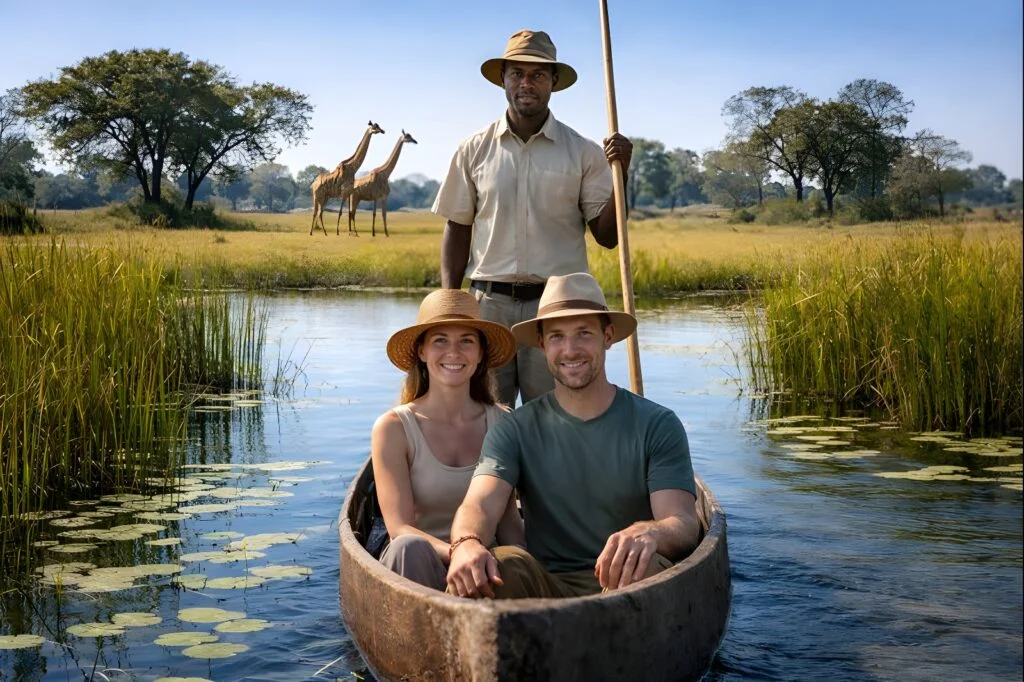
There is a moment that stays with you here: the low rumble of elephants along the Chobe River, the gentle glide of a mokoro across quiet Okavango channels, or the endless horizon of the Makgadikgadi salt pans shimmering like an ancient mirage.
Botswana doesn’t overwhelm with noise or spectacle. Instead, it welcomes you into silence, open space, and untouched wilderness. It is a safari characterized by intimacy, conservation, and the sense of being in a truly pristine place. If that calls to you, you’re on the right path.
This guide is here to help you plan your trip with confidence. Botswana is one of Africa’s most renowned safari destinations, with a strong emphasis on conserving wilderness areas and preserving the natural environment for tourism.
Travel there follows a conservation model that limits crowds and mass tourism. That exclusivity makes the experience extraordinary, but it also requires setting the right expectations, planning carefully, and understanding how this landscape functions.
Below is everything you need to organize your Botswana safari clearly and purposefully.
Setting the foundation: Grasping Botswana’s safari method
Botswana protects more than a third of its land for wildlife. It chooses fewer visitors in exchange for thriving ecosystems. The result is space, silence, and intimate sightings rather than rushed ones.
This experience is far removed from the typical safari, where you often find yourself jostling for a view alongside countless other vehicles, characteristic of the mass-market tours that dominate many regions of Africa. Instead, here, you will immerse yourself in the unspoiled wilderness, accompanied solely by your knowledgeable guide and your fellow travelers. This intimate setting allows for a deeper connection with nature, where you can truly appreciate the serene beauty of the landscape and the wildlife that inhabits it, forging unforgettable memories as you explore the untamed terrain together.
Before you start booking, be clear on the experience you are looking for:
- Exclusivity and Space: Camps are intentionally small. Rooms are limited to preserve habitats.
- Water-Based Wilderness: The Okavango Delta creates a maze of lagoons and floodplains, accessible only by light plane or boat.
- High-Density Wildlife: Botswana is home to one of Africa’s largest elephant populations and substantial numbers of predators.
- Quality Over Quantity: Fewer roads and more private concessions allow for quiet and meaningful wildlife encounters.
If your ideal safari prioritizes authenticity, nature-led experiences, and conservation ethics, Botswana will feel like a perfect fit.
Deciding when to visit: Botswana safari season
Botswana’s landscapes shift dramatically between seasons, and your experience will change with them. Understanding the rhythms of water and rain is essential.
Dry season (May to October)
This is peak safari season. Days are clear, and the water in the Okavango Delta spreads across floodplains, attracting wildlife to permanent water sources. Visibility is excellent. Temperatures are cool in the mornings and evenings and warm during the day. The dry season offers the best chance of predator sightings, but it also comes with the highest prices.
Green season (November to April)
Often misunderstood as a time to avoid. The rains return, turning the bush lush and emerald. The calving season begins, drawing predators. Migratory birds arrive in their full plumage. Afternoon storms paint the sky with drama. Rates are lower, and photographers often prefer this time of year. Some remote areas can be more challenging to reach, and humidity levels are higher, but the rewards can be exceptional.
Budgeting the journey: How much does a safari in Botswana cost?
Botswana is among the most expensive safari destinations in Africa. This is intentional and directly linked to its conservation efforts. Fewer guests result in less impact on fragile ecosystems. The higher prices support ranger patrols, community initiatives, and ecological protection.
Typical daily rates per person (including meals, activities, guide services, and often drinks):
- Mid-Range: 500 to 1000 USD
- Luxury: 1200 to 2000 USD
- Ultra-Luxury: 2500+ USD
Transfers by light aircraft between camps can increase costs, but they are part of the adventure and essential due to the region’s geography. To make the journey worthwhile, it’s best to plan for at least 7 to 10 days, ideally combining two or three regions for a more enriching experience.
Traveling with children in Botswana can be a rewarding experience, but it’s important to note that many lodges impose age restrictions on certain activities, particularly walking safaris and mokoro excursions.
These restrictions are often in place to ensure the safety and enjoyment of all guests. Families planning their adventures may want to research lodges that specifically cater to children or offer family-friendly programs.
Couples, honeymooners, and small groups often find Botswana an especially enchanting destination. The country’s breathtaking landscapes, abundant wildlife, and luxurious lodges create a romantic and memorable atmosphere.
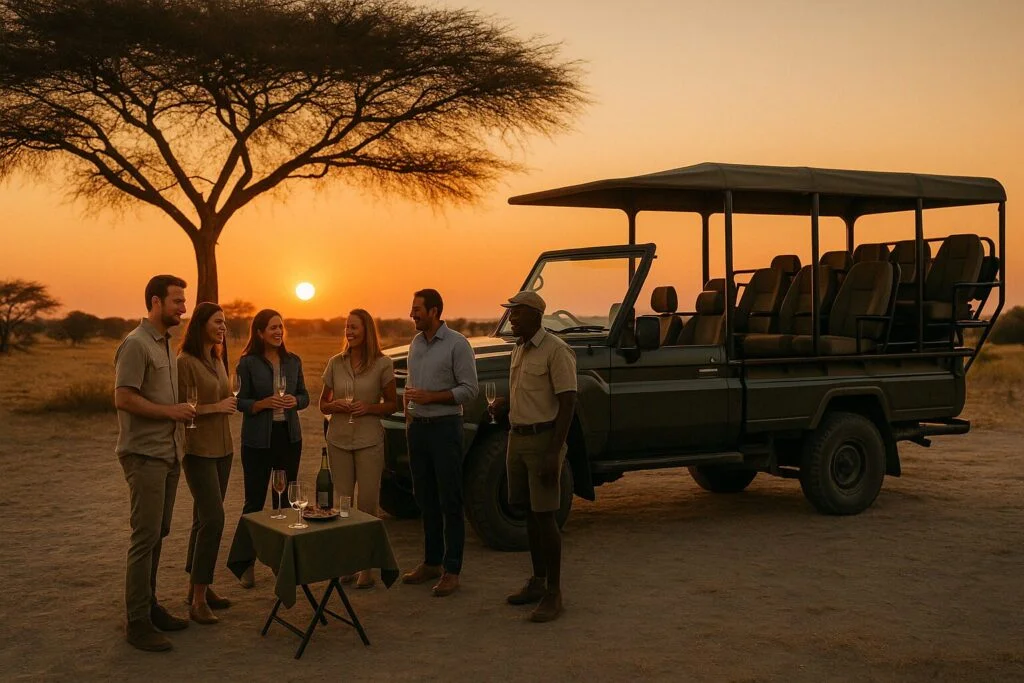
Many lodges offer bespoke experiences, such as private dinners under the stars and personalized safaris, making it a meaningful getaway for those seeking to connect with nature and one another. Whether it’s the stunning sunsets over the Okavango Delta or the serene beauty of the Kalahari Desert, Botswana provides a unique backdrop for treasured memories.
Designing your itinerary: Choosing the right style of safari
There are three primary ways to experience the country. When planning safari trips to Botswana:
Lodge-based safari
This is the classic model. You fly into a remote camp that serves as your home base for various activities. Lodges range from understated bush camps to ultra-luxury suites with expansive views. Activities vary by location, including game drives, boating, mokoro excursions, walking safaris, and, occasionally, night drives in private concessions.
Mobile tented safari
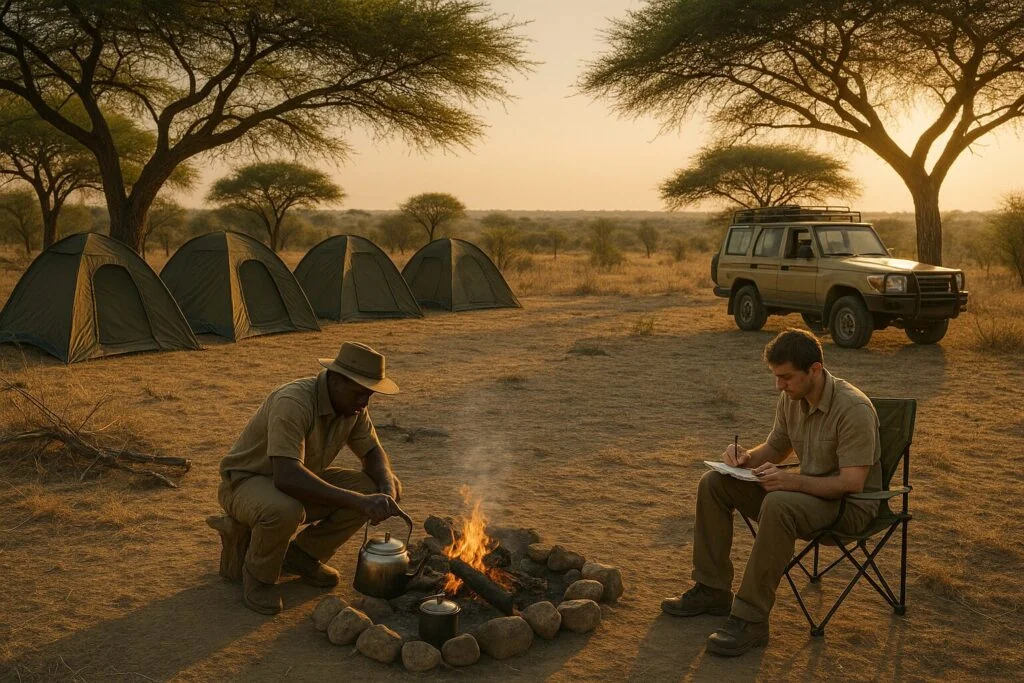
The concept of a mobile tented safari may seem unfamiliar if you’ve never experienced one before. Think of it as traveling through the wilderness with your camp moving alongside you.
Instead of staying in a fixed lodge, you journey across various wildlife areas over several days, with a dedicated team setting up a comfortable campsite at each location you visit.
The tents are spacious, equipped with comfortable beds and proper linens, and often feature en-suite bush bathrooms. Meals are freshly prepared on-site and typically enjoyed around a campfire under the stars.
This experience is immersive, bringing you close to nature, where you can listen to the sounds of the night, wake up with the sunrise, and follow wildlife as it moves across the landscape.
It’s not a rough or improvised experience; rather, it offers a more intimate way to travel through pristine wilderness, allowing you to feel part of the environment rather than just passing through.
The concept is ideal for travelers seeking a profound connection to the wilderness. You move between private campsites over several days, accompanied by a camp team. The tents are comfortable, and the meals are surprisingly refined. Days blend seamlessly with the rhythm of the bush.
Self-driving safari
A self-drive safari puts you in control; you navigate wildlife areas in your own (or rented) 4×4 vehicle, plan your route, and manage your time independently, rather than joining guided game drives. Many travelers prefer this style for the freedom, privacy, and the satisfaction of exploring at their own pace.
In Botswana, self-drive adventurers typically focus on areas such as Chobe National Park, particularly the riverfront, and the Makgadikgadi region, where road conditions are more predictable and access points are easier to navigate. However, the interior of the Okavango Delta, especially in remote private concessions, is not suitable for self-driving due to safety and logistical concerns.
How to acquire a safari vehicle and camping equipment in Botswana
If you don’t have your own safari vehicle, you can rent a fully equipped 4×4 from a vehicle rental company in Maun, Kasane, or Gaborone. These vehicles usually include:
- Roof-top tent or ground tent
- Portable fridge/freezer
- Gas stove and kitchen equipment
- Recovery gear (sand tracks, tow rope, jack)
- Extra fuel and water storage
- Basic first aid kit
Rental companies such as Bushlore, Britz, Travel Adventures Botswana, and Safari Drive specialize in vehicles designed for remote travel. They can also assist with route planning, park permits, and campsite bookings.
Regional guide: Understanding Botswana’s safari landscapes.
The Okavango Delta

A UNESCO World Heritage Site and the heart of Botswana’s safari identity. The Okavango Delta, a seasonal floodplain, lies in northern Botswana, where the Okavango River flows south from the highlands of Angola and spreads out across the Kalahari Desert. It forms a vast inland wetland system, characterized by oxbow lagoons and palm-dotted islands. that never reach the sea.
Key regions to understand:
- Permanent Swamp: Year-round water. Ideal for mokoro and boating. Wildlife moves among islands.
- Seasonal Floodplains: Water levels vary. These regions offer some of Botswana’s finest game drives during the dry season.
Most luxury wildlife experiences in the Delta are located within private concessions bordering the Moremi Game Reserve. These allow night drives, off-road tracking, and walking safaris.
Chobe National Park

Chobe National Park is situated in the far northeast of Botswana, at the point where the country borders Namibia, Zambia, and Zimbabwe. The park is defined by the Chobe River, which marks its northern boundary and supports one of Africa’s largest elephant populations.
Chobe Riverfront, home to thousands of elephants that gather daily, offers a unique safari experience from the water. Sunset boat cruises offer a chance to witness elephant crossings, crocodiles basking in the sun, and herds of buffalo coming to drink.
Additionally, game drives are available year-round, allowing you to embark on your adventure whenever you’re ready, with excellent opportunities for photography.
Kasane town, the gateway to Chobe, makes it incredibly convenient to combine your Chobe adventure with a visit to the majestic Victoria Falls. Their close proximity ensures a seamless transition from one awe-inspiring experience to another.
Central Kalahari & Makgadikgadi Pans

The Central Kalahari Game Reserve (CKGR) is situated in the heart of Botswana. It is one of the largest protected areas in Africa, spanning approximately 52,800 square kilometers of open plains, fossil-rich river valleys, and rolling dunes.
Its vast, semi-arid landscapes stretch across central Botswana, creating a wilderness so expansive that you can drive for hours without encountering another vehicle.
The Makgadikgadi Pans lie to the northeast of the CKGR, within the broader Kalahari Basin, and form the largest salt pan systems on the Planet. Spanning roughly 30 000 km2, these ancient lakebeds are flat, white, and seemingly endless, surrounded by grasslands, baobab islands, and desert-savanna habitats that change dramatically with the seasons.
This is the wild and spacious Botswana that few travelers know. The Central Kalahari Game Reserve offers silence, black-maned lions, and open plains. The Makgadikgadi Pans are ancient salt flats that appear lunar in scale and silence.
This region is ideal for travelers curious about emptiness, space, and desert-adapted wildlife. Meerkat interactions, star-filled nights, and stories of San culture offer deep and personal experiences.
How to travel to Botswana: Flights and entry essentials
Main entry points:
- Maun (MUB): Gateway to the Okavango Delta
- Kasane (BBK): Gateway to Chobe National Park
Most travelers first fly into Johannesburg (OTI) or Cape Town (CPT), South Africa, before connecting to Botswana.
From Maun or Kasane, light bush aircraft transfers are required to reach remote camps. These flights are small and scenic, offering your first aerial view of the Delta’s islands and lagoons.
Health, safety, and travel documents
Northern Botswana is recognized as a malaria-prone region, particularly around the Okavango Delta, Chobe, and Linyanti. It is recommended that travelers consult a travel clinic to explore options for malaria prevention. To lower the risk of infection, using mosquito repellent, dressing in long sleeves during the evening, and sleeping beneath a treated mosquito net are also advisable.
- Carry valid travel insurance that includes medical evacuation coverage. Camps are remote.
- Many nationalities enter visa-free, but always confirm before travel.
- Your passport must be valid for at least 6 months and have at least 2 blank pages.
What to pack for your first Botswana safari trip
When preparing for your safari trip, be sure to pack a variety of neutral-colored clothing that can easily blend into your surroundings. Light layers are essential for daytime activities, as temperatures can fluctuate throughout the day.
For the cooler early mornings and evenings, include warmer layers, such as a fleece jacket or a light down vest, to stay comfortable. Keep in mind that from June to August, temperatures can drop unexpectedly, so be ready for chilly conditions.
Don’t forget to pack essential sun protection items, including a broad-spectrum sunscreen with a high SPF, a wide-brimmed hat to shield your face and neck, and a pair of polarized sunglasses to protect your eyes from the sun’s glare. Additionally, be mindful of pesky insects; bring a good-quality mosquito repellent to keep bugs at bay.
A reusable water bottle is also a must-have, as lodges provide filtered water, making hydration easy without single-use plastic bottles. This simple item will make your travel experience more convenient and environmentally friendly.
Essential gear:
- Binoculars (8×42 or better work well)
- Camera with zoom (200mm or higher if you enjoy photography)
- Power bank and extra memory cards
- Universal plug adapter (Botswana uses Type D, M, and G plugs)
Carry both digital and paper copies of all your legal documents. When visiting local communities, ask before taking photographs. Remember, engage them with courtesy and respect.
A typical day on a safari in Botswana: What to expect
A typical safari day in Botswana begins at dawn, when wildlife is most vibrant and active. The day begins with a gentle knock on your door, a subtle reminder that adventure awaits.
Soon after, the aroma of freshly brewed coffee wafts through the air, inviting you to savor the perfect prelude to your morning activity. You might embark on a thrilling game drive, gliding silently through the bush in search of majestic lions, graceful giraffes, or elusive leopards.
Alternatively, you could choose a serene mokoro ride, navigating the tranquil waterways that weave through lush wetlands, or opt for a relaxing boat excursion to observe hippos and crocodiles basking in the sun. For the intrepid, a guided walking safari offers an intimate connection with the landscape and the smaller wonders of nature.
After the morning’s excitement, you return to camp for a hearty brunch, typically featuring an array of local flavors and fresh ingredients, followed by a well-deserved rest during the midday heat.
As the sun begins its descent, painting the sky with shades of orange and pink, the afternoon opens up for another activity. This could be an exploratory drive that leads you to a hidden waterhole or a cultural visit to a nearby village.
As daylight fades, the golden hour envelops the landscape in a warm glow, offering perfect lighting for breathtaking photographs and quiet reflection.
Evenings are a time to unwind, often spent gathered around a crackling campfire under a magnificent star-studded sky. Here, stories are shared, laughter echoes through the night, and the sounds of the wild create an enchanting backdrop.
The guides in Botswana are truly among the finest in Africa, their expertise spanning tracking, ecology, and animal behavior. They are passionate and knowledgeable, eager to share their insights with you. Don’t hesitate to ask questions and satisfy your curiosity; their guidance will enrich your experience beyond measure.
Finally, it’s customary and appreciated to tip your guides and camp staff for their exceptional service. Most camps conveniently accept payments in US Dollars and Botswana Pula, ensuring a seamless end to your unforgettable adventure.
The Journey Ahead
Embarking on a Botswana safari is an adventure that calls for careful planning, patience, and a deep respect for the natural world around you. The reward for your efforts is an immersive experience that feels astonishingly unspoiled and vibrantly alive.
You are not merely visiting a location; you are enveloping yourself in a dynamic wilderness that flourishes under the guardianship of thoughtful conservation. Travel with heightened awareness. Choose to support eco-conscious operators and lodges that enhance both conservation efforts and the well-being of local communities.
Take a moment to pause and soak in the profound silence that surrounds you. Allow the captivating sounds of the Delta, the gentle flow of the Chobe River, and the whispering winds of the Kalahari to communicate their own stories.
This is not just a vacation; it is a profound return to the essence of what the world once was, an opportunity to reconnect with nature in its most authentic form. And this breathtaking journey is patiently awaiting your arrival.

I'm Peter, the voice behind Nomad Horizons Africa. I write honest, first-hand safari stories from Botswana and, increasingly, from Kenya, Tanzania, and my home ground here in South Africa. The raw version, not the brochure one. Alongside the storytelling, I advise travelers how to go on safari responsibly: by keeping your money working for local communities and conservation, knowing the do's and don'ts on the ground, and spotting the booking agents who'll happily take you for a ride. No hype, no hard sell. Just what I'd tell a friend before their first trip into the wild.
Planning yours? I've partnered with leading safari booking agent Safari.com, to bring real, bookable safaris straight into the blog, search and compare them honestly with the Safari Finder. Find your perfect safari →
Disclosure: some links here are affiliate links, so Nomad Horizons may earn a small commission if you book, at no extra cost to you. It helps keep the site independent and the advice free.