
When the Safari World Feels Too Crowded
For many travelers, the dream of an African safari begins with wide savannas, silent horizons, and wildlife moving freely across untamed plains. Yet the reality in some popular safari destinations can feel very different. At a busy wildlife sighting, several vehicles may gather around a single lion or leopard. Cameras click, engines idle, and the moment that was meant to feel wild suddenly feels crowded.
This experience has led many travelers to ask a simple question: What makes Botswana unique among safari destinations? Botswana took a different path from the start. Instead of building a tourism industry based on large visitor numbers, the country chose a conservation-first approach. National parks, wildlife reserves, and private concessions were designed to protect ecosystems first and welcome travelers second. The result is a safari experience where space, silence, and wilderness remain part of the journey.
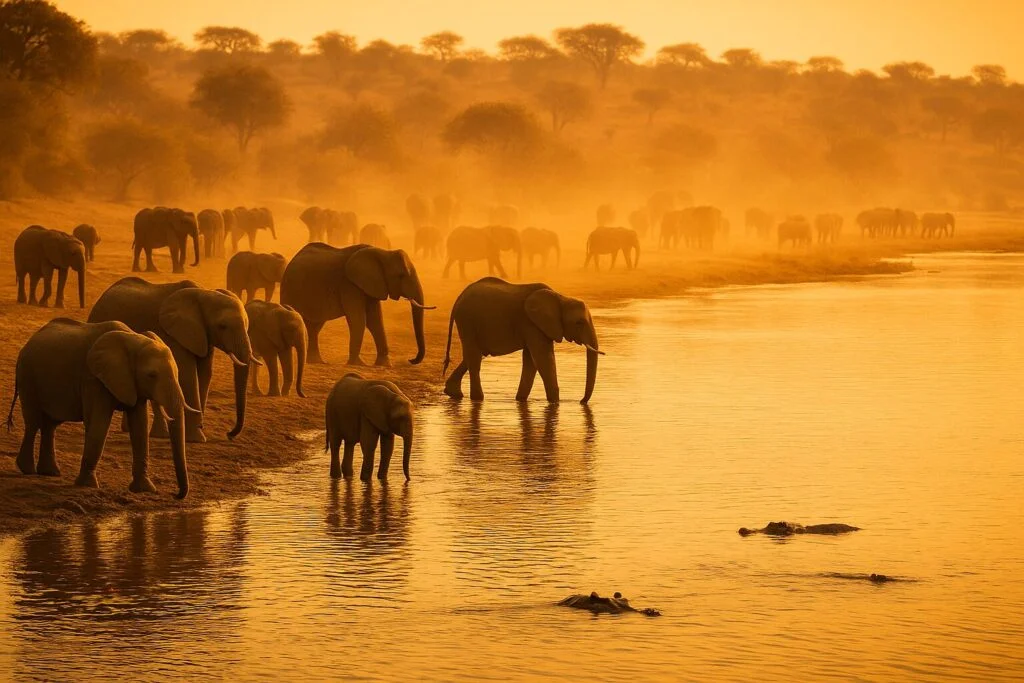
Across Botswana, wildlife still moves through enormous unfenced landscapes. Elephants cross rivers at sunset without a line of vehicles behind them. Lions patrol wide desert plains where the horizon stretches for kilometers. In the Okavango Delta, travelers glide quietly through reed-lined channels in traditional mokoro canoes while birds call from the papyrus.
These moments are far from coincidental; they stem from intentional choices about how tourism should be shaped in one of Africa’s most remarkable wilderness areas. To truly appreciate what makes Botswana unique, we need to move beyond the standard safari checklist of animals and game drives.
It’s about delving into a country where diverse landscapes, vibrant wildlife, and innovative conservation policies come together to craft a safari experience that feels distinctly different from much of the rest of Africa. To understand why Botswana stands out, we should first explore the country itself and the natural elements that have forged its reputation as one of Africa’s most extraordinary safari destinations.
Botswana at a Glance: A Wilderness Destination Built Around Conservation
Botswana sits quietly in the heart of southern Africa, yet within its borders lies one of the continent’s most remarkable wilderness networks. Expansive landscapes stretch across the country, largely untouched by human development. A mix of national parks, wildlife reserves, and private conservation areas blankets the land, creating safe havens where wildlife continues to follow its ancient migration paths.
For travelers wondering what makes Botswana unique, the answer begins with geography. This is a country shaped by striking contrasts. In the north, the Okavango River spills into the sands of the Kalahari, forming the vast inland delta that transforms desert into a living wetland. To the east, the Chobe River flows through one of Africa’s richest wildlife corridors.
Farther south, the Makgadikgadi Salt Pans spread across the horizon, creating an almost otherworldly landscape that once formed the floor of an ancient lake. At the center of the country lies the immense Central Kalahari Game Reserve, one of the largest protected wilderness areas on Earth.
Together, these ecosystems help explain what Botswana is known for. The country protects extraordinary wildlife populations, including the largest concentration of African elephants anywhere in the world. Lions roam the Kalahari’s desert grasslands, leopards move quietly through riverine forests, and rare species such as African wild dogs thrive in landscapes where space still exists for predators to hunt and migrate.
Yet Botswana’s reputation as a safari destination is not defined solely by wildlife. What truly sets the country apart is its long-standing commitment to conservation. Decades ago, Botswana deliberately chose to protect its natural heritage by limiting the scale of tourism. Instead of encouraging large crowds, the country developed a low-impact safari model that preserves wilderness while supporting local communities and conservation programs.
This philosophy has shaped every aspect of Botswana’s tourism industry. Safari camps tend to be small and carefully positioned within fragile ecosystems. Many operate in private concessions where strict environmental guidelines protect wildlife habitats. Travelers often find themselves exploring landscapes where the sense of space and solitude feels increasingly rare in the modern safari world.
These choices help explain why Botswana safari experiences feel different from those in other parts of Africa. The country’s landscapes remain vast, its wildlife encounters feel intimate, and its tourism model centers on protecting wilderness on every journey.
Within this remarkable setting, several experiences stand out as truly distinctive. They reveal what makes Botswana unique and why many travelers consider it one of the most extraordinary safari destinations in Africa.
To truly understand what makes Botswana special, you have to look beyond the animals and explore the remarkable environments and experiences that shape a safari here. Below, we unveil 8 incredible facts that make Botswana unique among African safari destinations.
1. Where the Desert Turns to Water: The Okavango Delta’s Living Miracle

Few places on Earth capture the imagination quite like the Okavango Delta. From the air, it appears as a vast green mosaic spreading across the northern Kalahari Desert. Rivers branch into countless channels, lagoons, and floodplains, creating one of the most extraordinary ecosystems in Africa.
The Okavango Delta is the world’s largest inland delta, yet unlike most deltas, it never reaches the sea. Instead, seasonal floodwaters from Angola flow southward and slowly disappear into the sands of Botswana’s desert. Each year, this remarkable process transforms dry land into a vibrant wetland filled with life.
This annual flood is the heartbeat of the delta. As water spreads across the landscape, fish move into shallow lagoons, birds gather along reed-lined channels, and herds of antelope arrive to graze on fresh grasses. Predators soon follow. Lions patrol the floodplains, leopards hunt along riverbanks, and crocodiles slip quietly through hidden channels.
The result is a safari environment unlike any other in Africa. Wildlife moves through a landscape where islands rise from shallow waters and papyrus sways in the wind. Elephants wade through flooded grasslands while hippos claim quiet lagoons.
It is this extraordinary relationship between water and desert that helps explain what makes Botswana unique in the safari world. The Okavango Delta is not simply a place to see wildlife. It is a living wilderness shaped by one of nature’s most remarkable seasonal transformations.
Recognizing its global importance, the delta was declared a UNESCO World Heritage Site. Yet its true value lies in something deeper. It remains one of the last great ecosystems on Earth where water still dictates the rhythm of life.
2. Drifting Through the Delta: Mokoro Safaris in Botswana’s Quiet Waterways

While game drives remain the classic safari activity across Africa, Botswana offers an experience that feels far more intimate. In the quiet waterways of the Okavango Delta, travelers often explore the landscape in traditional dugout canoes known locally as mokoros.
A mokoro safari moves at the pace of the wilderness. Instead of an engine, a skilled poler stands at the back of the canoe and guides it through narrow channels using a long wooden pole. The boat glides silently through clear water while tall papyrus reeds rise on either side.
Without the hum of an engine, the senses sharpen. Dragonflies hover above the water. Frogs call from hidden pools. Red lechwe splash through flooded grasslands while elephants appear quietly on distant islands.
These journeys reveal a very different side of the African safari. Travelers do not simply watch the environment from a vehicle. They move gently through it, becoming part of the open country.
The mokoro also carries cultural meaning. For generations, local communities have used these canoes to travel through the delta’s waterways while fishing and gathering resources from the wetlands. Today, experienced polers share this tradition with visitors, guiding them safely through one of Africa’s most delicate ecosystems.
Experiencing the delta’s water level fluctuations helps explain why visiting Botswana safari destinations is a good idea if you are seeking something truly distinctive. Few places allow travelers to explore wildlife habitats so quietly and respectfully.
A mokoro safari is not about speed or distance. It is about slowing down long enough to notice the small details of the wilderness.
3. The Land of Giants: Botswana’s Unmatched Elephant Kingdom

Botswana is known for being home to the largest population of African elephants on Earth. These animals move across northern Botswana in vast numbers, shaping landscapes as they travel between water sources, woodlands, and floodplains.
For many visitors, encountering elephants becomes one of the defining moments of their safari. In places such as Chobe National Park and the Okavango Delta, herds can number in the hundreds. Young calves walk close to protective mothers while older bulls move slowly through the bush with quiet confidence.
Watching elephants in Botswana offers insight into complex family structures that have developed over decades. Matriarchs guide their herds along ancient routes, leading them to seasonal feeding grounds and waterholes that have sustained generations.
These movements also play an essential role in shaping the ecosystem. Elephants open pathways through dense vegetation, spread seeds across vast distances, and create water access points used by other animals. Few destinations allow travelers to observe elephant behavior on such a large and natural scale.
Standing quietly as a herd passes through the terrain is a reminder that Botswana remains one of the last places where wildlife still moves freely across enormous wilderness areas.
4. Rivers of Wildlife: Boat Safaris Along the Legendary Chobe River

Chobe National Park offers another safari experience rarely found elsewhere in Africa. Instead of exploring only by vehicle, many visitors take to the water along the Chobe River. Boat safaris reveal Chobe from an entirely different perspective. As the boat drifts along the riverbank, wildlife gathers at the water’s edge. Elephants arrive in large family groups to drink and swim. Buffalo stand knee-deep in the river while hippos surface quietly nearby.
One of the most remarkable sights occurs in the late afternoon when elephants begin crossing the river between Namibia and Botswana. Herds enter the water together, calves sheltered between adults as they swim toward distant islands. Watching this scene unfold under the golden light of sunset explains why many travelers consider Chobe one of Africa’s great wildlife spectacles.
Boat safaris also allow visitors to observe animals in their natural habitat. In the absence of nearby vehicles, wildlife often appears relaxed and unhurried. For photographers and nature lovers, these moments reveal another dimension of the African safari. The rhythm of life along the Chobe River unfolds slowly, shaped by water, migration, and the quiet routines of the wilderness.
5. The Dark-Maned Monarchs of the Kalahari: Botswana’s Most Iconic Lions
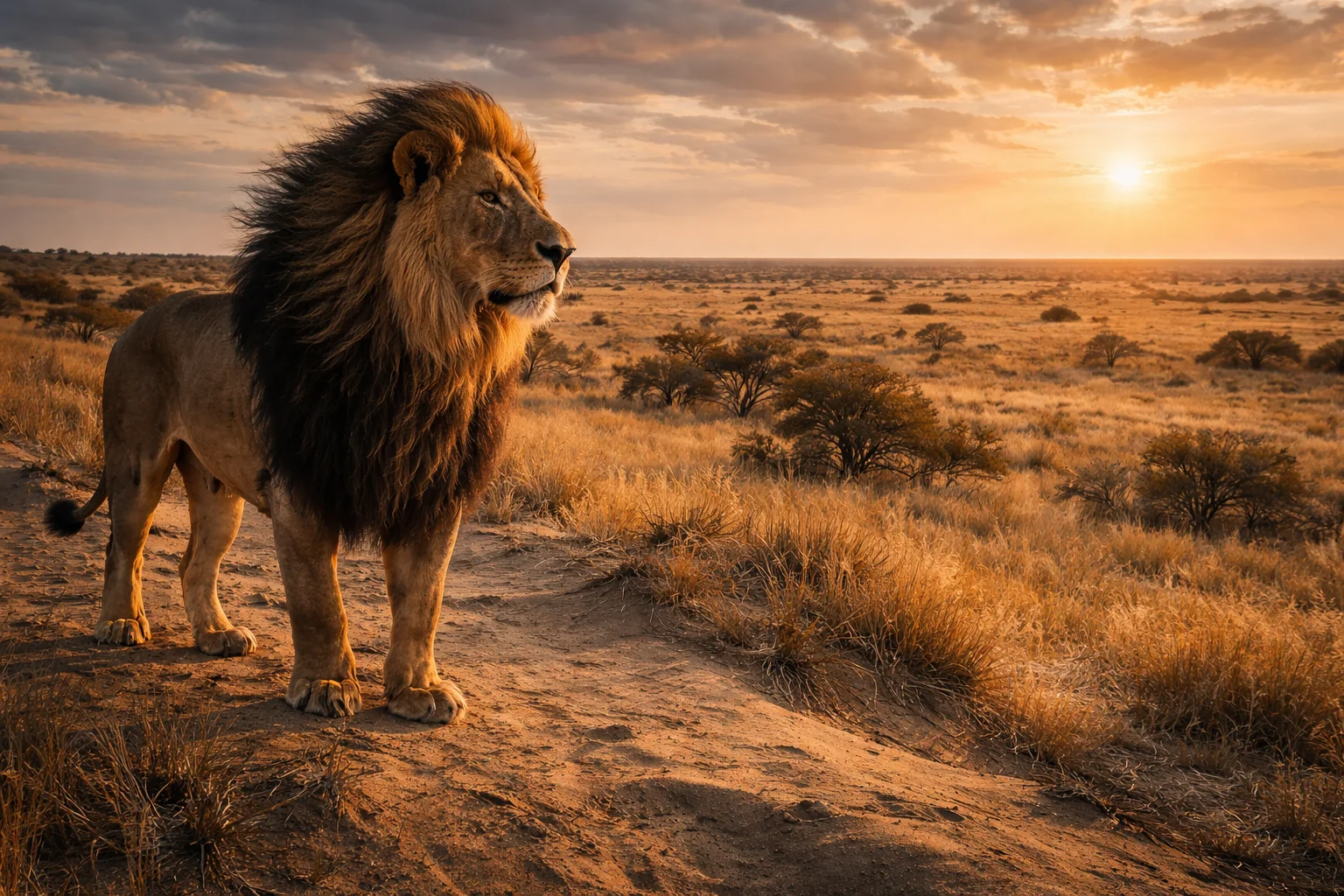
Far from the wetlands of northern Botswana lies a very different landscape. The Central Kalahari Game Reserve spans vast grasslands and desert plains, where survival depends on adaptation to a harsh environment. Here it is, home to one of the most striking predators in Africa: the legendary black-maned Kalahari lion.
These lions are distinguished by their prominent dark manes, which elegantly frame their heads and shoulders, giving them a powerful, distinctive appearance. Research shows that environmental factors influence coloration, while challenging conditions in the Kalahari Desert likely shape genetic traits.
Life in this desert environment demands resilience. Prey is scattered across large distances, and water is scarce during the dry season. Yet lions have adapted remarkably well, hunting antelope such as gemsbok and springbok that roam the open plains.
The Central Kalahari offers an entirely different safari atmosphere. Instead of dense vegetation and rivers, visitors encounter endless horizons and wide skies. Wildlife sightings often feel more dramatic because animals appear against the stark backdrop of the desert.
Interactions with Kalahari lions serve as a reminder to travelers that Botswana’s wilderness encompasses more than just one type of ecosystem. Spanning wetlands to deserts, the nation safeguards diverse landscapes where wildlife flourishes despite vastly different environmental conditions.
6. Face-to-Face With Wild Meerkats, Smallest Hunters of The Region
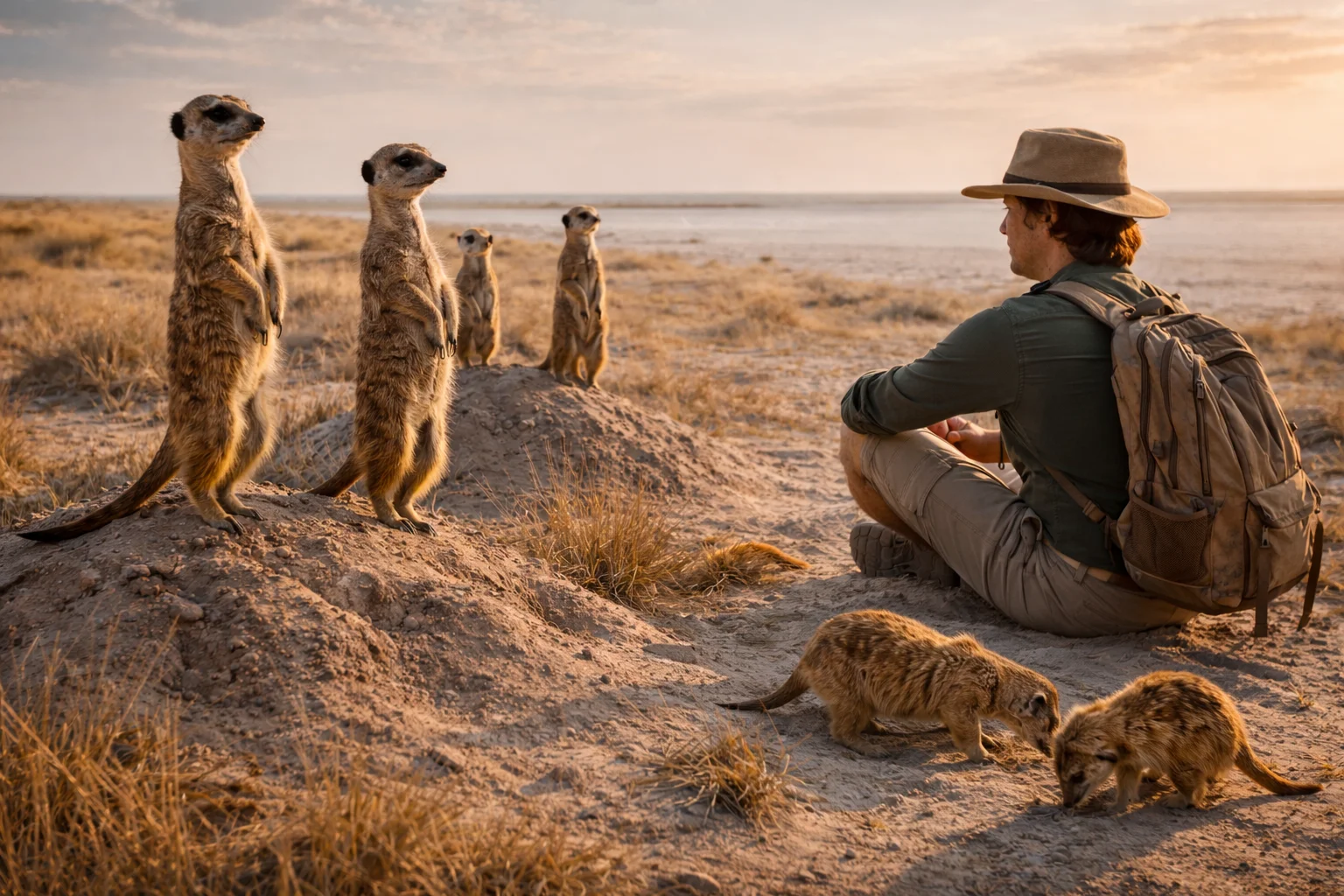
In the Makgadikgadi region, safari experiences often highlight one of Africa’s smallest predators: the meerkat. Habituated colonies inhabit various areas of the salt pan ecosystem. Over time, these curious animals have become accustomed to the respectful presence of humans, enabling visitors to observe their behavior up close.
Watching a meerkat colony reveals an intricate social world. As some meerkats search for insects, others stand tall as lookout sentries, keeping a watchful eye on the horizon for any approaching threats. Continuous communication fills the air, with soft chirps and warning calls flitting between the group. These lively interactions often take place on foot, allowing visitors to wander through the desert landscape while gaining a deeper understanding of the delicate balance of life in this remarkable habitat.
The experience highlights a quieter side of safari travel. Instead of focusing only on large animals, visitors begin to notice the intricate relationships that sustain smaller species within the ecosystem. Moments like these often help travelers discover what makes Botswana different from other safari destinations. The wilderness here rewards patience and curiosity just as much as it rewards dramatic wildlife sightings.
7. The Makgadikgadi Pans Zebra Migration: Botswana’s Hidden Wildlife Spectacle
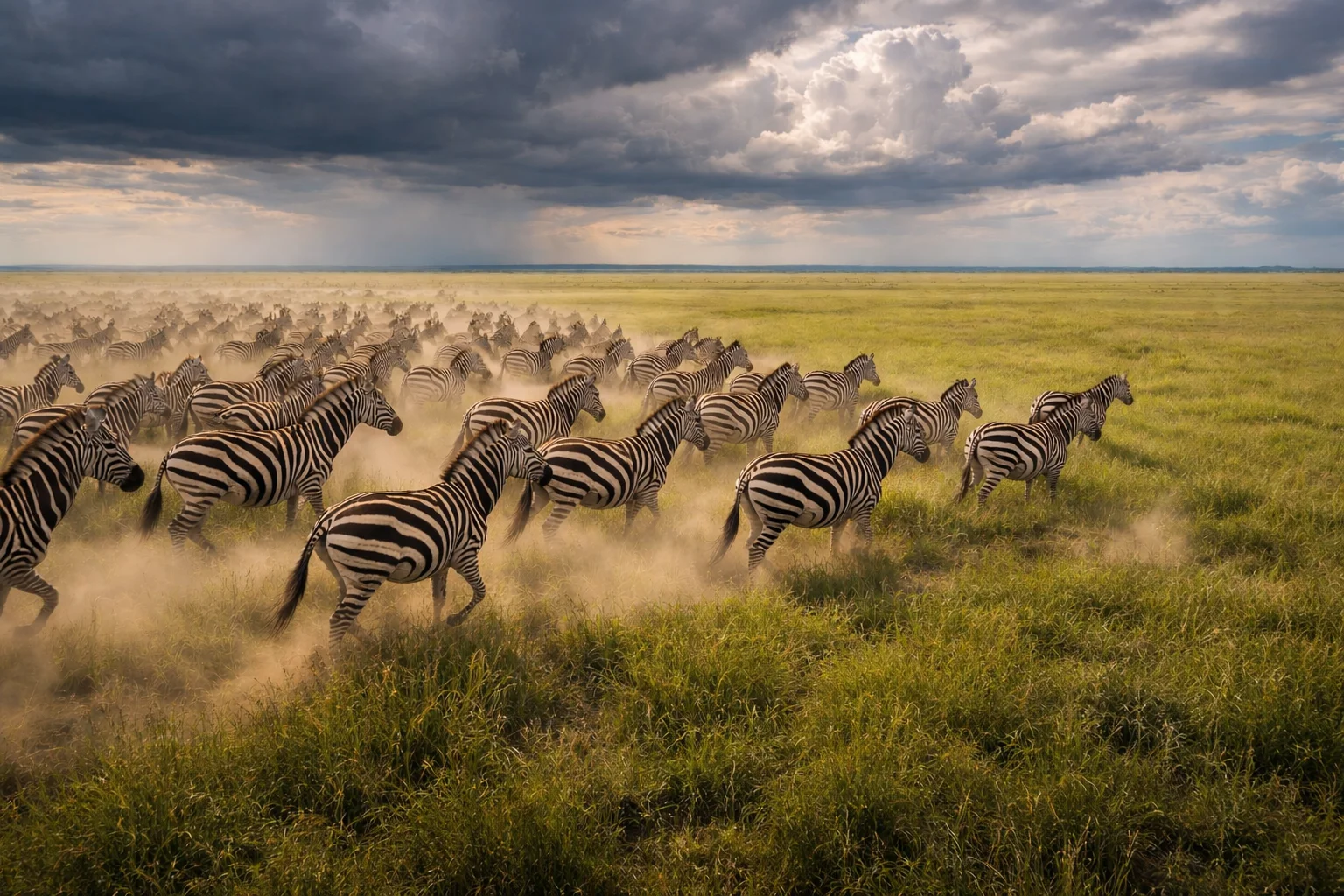
When seasonal rains return to Botswana’s salt pans, one of Africa’s lesser-known wildlife movements begins. Thousands of zebras migrate between the Chobe region and the grasslands of Makgadikgadi. This journey forms part of the second-largest zebra migration on the continent.
For much of the year, the Makgadikgadi Pans appear dry and almost lifeless. Yet after rainfall, grasses emerge across the plains, drawing large herds of zebra, wildebeest, and other herbivores. Predators soon follow the movement of prey. Lions and hyenas patrol the grasslands while vultures circle high above the open landscape.
Witnessing this migration reveals another dimension of Botswana’s wilderness. Wildlife continues to follow ancient seasonal patterns that have shaped these ecosystems for centuries. For travelers fortunate enough to experience it, the migration provides a powerful reminder that Botswana still protects landscapes large enough to support these natural movements.
8. The Quiet Power of Wilderness: Botswana’s Low-Impact Safari Model

Beyond its landscapes and wildlife, Botswana’s greatest distinction may lie in the philosophy that guides its tourism industry. The country adopted a conservation strategy often described as low-volume, high-value tourism. Rather than building large-scale tourism infrastructure, Botswana chose to protect wilderness areas by limiting visitor numbers.
Safari camps are typically small and carefully placed within fragile ecosystems. Many operate in private concessions where strict rules govern vehicle numbers, off-road driving, and environmental impact. This model creates safari experiences that remain personal and uncrowded. Travelers may spend hours exploring remote areas without encountering another vehicle.
More importantly, tourism revenue helps support conservation programs and local communities that share responsibility for protecting wildlife. This approach explains why a Botswana safari is different from many other African safaris. The country’s tourism strategy centers on the long-term survival of its ecosystems in every visitor experience.
The Only True Wilderness: Why Botswana Remains Africa’s Most Special Safari
Botswana’s landscapes tell a story that stretches far beyond individual wildlife sightings. From the flooded channels of the Okavango Delta to the desert plains of the Kalahari, the country protects ecosystems that still function much as they have for centuries. Travelers often arrive wondering what makes Botswana unique among Africa’s safari destinations. By the time they leave, the answer usually feels clear.
It is the quiet glide of a mokoro slipping through papyrus channels while a fish eagle calls across the delta. It is the sight of elephants crossing the Chobe River at sunset, their silhouettes moving slowly through golden water. It is the distant roar of a Kalahari lion rolling across open plains long after darkness settles over the desert.
These are the moments that make Botswana truly special. Unlike staged encounters or crowded attractions, these experiences offer glimpses into a living wilderness where nature still leads and visitors observe respectfully. In Botswana, the safari experience isn’t defined by how many animals you spot in a day. Instead, it’s about the lasting impressions that stay with you long after you leave.
Long after the journey ends, travelers remember the silence of the delta, the vast horizons of the Kalahari, and the quiet understanding that some places on Earth are still wild enough to change the way we see the world. Botswana is one of those rare places, and once you have experienced it, the wilderness never quite lets you go. These experiences explain what makes Botswana unique and why many travelers consider it Africa’s most remarkable safari destination.
Frequently Asked Questions
Why is Botswana considered one of the best safari destinations in Africa?
Botswana is considered one of the best safari destinations in Africa due to its abundant wildlife, diverse ecosystems, and commitment to conservation. The Okavango Delta, a UNESCO World Heritage site, offers unique water-based safaris, while Chobe National Park is known for its large elephant populations. The country’s low-density tourism policy ensures a more exclusive and intimate wildlife experience. Additionally, the variety of landscapes, including savannas, deserts, and wetlands, provides diverse habitats for numerous species, making it a top choice for safari enthusiasts.
What makes Botswana different from other safari countries?
Botswana is distinguished by its low-density tourism model, emphasizing conservation and exclusive safari experiences. The country has vast protected areas, such as the Okavango Delta and Chobe National Park, that offer diverse wildlife and stunning landscapes. Additionally, Botswana’s commitment to sustainable tourism and community-based conservation initiatives sets it apart from other safari destinations.
What is Botswana best known for in tourism?
Botswana is best known for its stunning wildlife and natural landscapes, particularly the Okavango Delta, Chobe National Park, and the Kalahari Desert. It offers exceptional safari experiences, including the Big Five, and is recognized for its commitment to conservation and eco-tourism.
Related guides
- Is Botswana good for a safari?
- How much does a Botswana safari cost?
- The advantage of booking with one safari operator

I'm Peter, the voice behind Nomad Horizons Africa. I write honest, first-hand safari stories from Botswana and, increasingly, from Kenya, Tanzania, and my home ground here in South Africa. The raw version, not the brochure one. Alongside the storytelling, I advise travelers how to go on safari responsibly: by keeping your money working for local communities and conservation, knowing the do's and don'ts on the ground, and spotting the booking agents who'll happily take you for a ride. No hype, no hard sell. Just what I'd tell a friend before their first trip into the wild.
Planning yours? I've partnered with leading safari booking agent Safari.com, to bring real, bookable safaris straight into the blog, search and compare them honestly with the Safari Finder. Find your perfect safari →
Disclosure: some links here are affiliate links, so Nomad Horizons may earn a small commission if you book, at no extra cost to you. It helps keep the site independent and the advice free.


